

Core Engineering and SAP Hybris Modernization
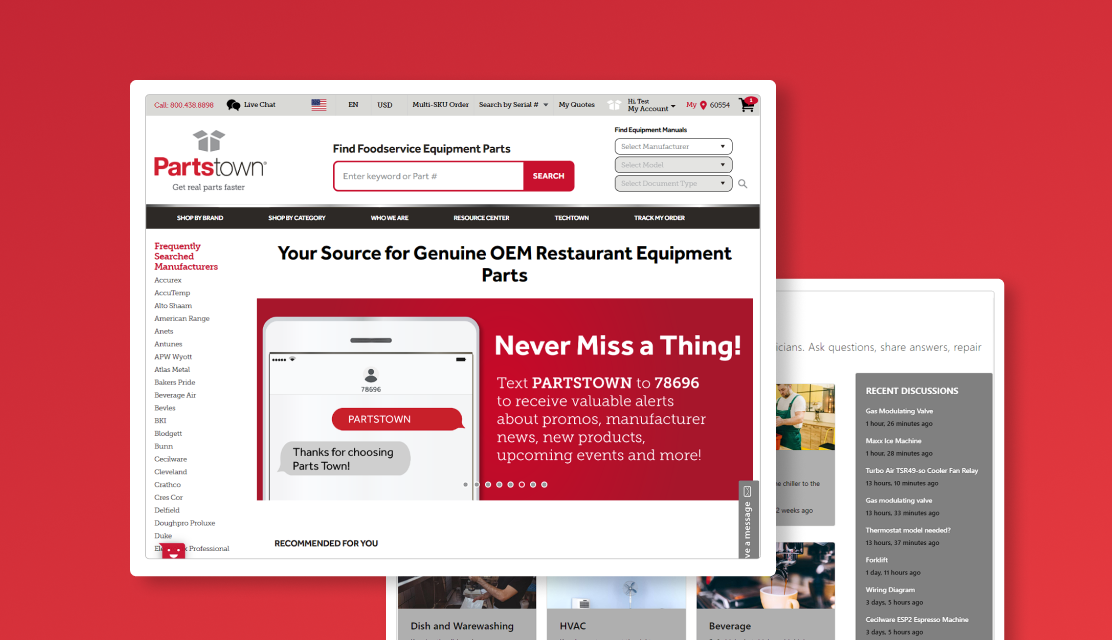
The technical foundation of this partnership centered on the SAP Hybris platform. Neoito managed both frontend and backend engineering to ensure the e-commerce experience remained scalable during periods of rapid growth. The team prioritized platform reliability to handle complex parts catalogs and high transaction volumes.
A significant architectural shift involved the implementation of Micro-Frontends using React to modernise the SAP Hybris storefront. This modern approach replaced monolithic structures with a more maintainable framework. By breaking the frontend into independent modules, the team enabled faster releases through decoupled deployment cycles. This transition allowed various business units to update features without risking the stability of the entire site.
On the backend, Neoito focused on seamless API integration and service-oriented architecture within the SAP environment. The engineering team introduced continuous enhancements to ensure the platform could support new digital services and third-party tools as the business expanded.
Agile Transformation and Process Coaching
Neoito did not just write code; it restructured how work moved from idea to production. A certified Agile Coach led initiatives to assess and improve team maturity across the organization. These efforts standardized daily ceremonies, sprint planning, and retrospectives to create a unified cadence.
The introduction of “Scrum of Scrums” facilitated critical synchronization across multiple development teams. This structure eliminated communication silos and streamlined inter-team dependencies. To define clear expectations, Neoito established formal Definitions of Ready (DoR) and Definitions of Done (DoD). These standards reduced ambiguity and ensured that only high-quality code entered the release pipeline.
To measure the effectiveness of these changes, the team initiated DORA metrics and funnel performance tracking. These data points provided visibility into lead times, deployment frequency, and change failure rates. This focus on transparency turned gut-feeling improvements into verifiable business outcomes.
DevOps and SRE Automation
Modernizing the software required modernizing the infrastructure. Neoito implemented end-to-end CI/CD pipelines to automate the journey from development to production. The team utilized Kubernetes and Docker for containerization, which provided a consistent environment across development, testing, and live stages.
The shift toward Site Reliability Engineering (SRE) focused on proactive platform health. Neoito enhanced observability and alerting systems to identify potential issues before they impacted customers. This infrastructure maturity enabled zero-downtime deployments, allowing the business to roll out updates during peak hours without service interruptions.
Quality Assurance Strategy
The goal for the QA department was to achieve 100% automation coverage. Neoito utilized a hybrid approach that combined rigorous manual testing with automated scripts for both web and mobile platforms. This dual strategy ensured that new features performed correctly while regression tests protected existing functionality.
By enhancing pre-release validation, the team significantly reduced the number of bugs reaching production. Automated testing frameworks allowed for parallel execution, which drastically cut down the time required for full regression cycles. This shift moved QA from a bottleneck to an accelerator in the development lifecycle.
Quantifiable Business Impact
The seven-year partnership yielded specific improvements in operational efficiency and delivery predictability:
- 30% Reduction in Handoff Delays: Cross-functional alignment and blocked-item tracking accelerated project timelines.
- 40% Faster Release Cycles: Streamlined CI/CD pipelines and automated testing reduced time-to-market for new features.
- 40% Reduction in QA Cycle Time: Parallel testing strategies cut validation time by half.
- 25% Increase in Sprint Predictability: Improved backlog grooming and agile maturity reduced sprint spillover.
| Metric | Improvement | Primary Driver |
| Handoff Delays | 30% | Scrum-of-Scrums alignment |
| Release Velocity | 40% | CI/CD & Pipeline optimization |
| QA Validation | 40% | Test automation frameworks |
| Sprint Accuracy | 25% | Agile maturity & grooming |
Technical Ecosystem and Partnership Network
Neoito integrated a wide array of industry-standard technologies to support the SAP Hybris core. The stack included AWS and DigitalOcean for cloud infrastructure, Snowflake and Databricks for data intelligence, and Salesforce for CRM integration. For performance and security, the team leveraged Cloudflare and managed payment processing via Stripe.
Future Roadmap and Innovation
The partnership continues to evolve with a focus on emerging technologies. Future initiatives include expanding DevOps into a full platform engineering model to further empower developers. Neoito is also exploring the integration of Large Language Models (LLMs) to enhance customer support and internal analytics.
Key areas for upcoming collaboration include:
- Chat Commerce: Implementing AI-driven sales and support interfaces.
- GenAI Agents: Driving internal productivity through automated agents.
- AI-Powered QA: Transitioning from traditional automation to self-healing AI test suites.
- Complete ITSM/ASM Support: Strengthening the IT Service Management and Application Support Management framework.
Neoito remains committed to driving innovation through its global presence in the USA, UK, and India. This partnership demonstrates that long-term success stems from aligning technical execution with fundamental process transformation.